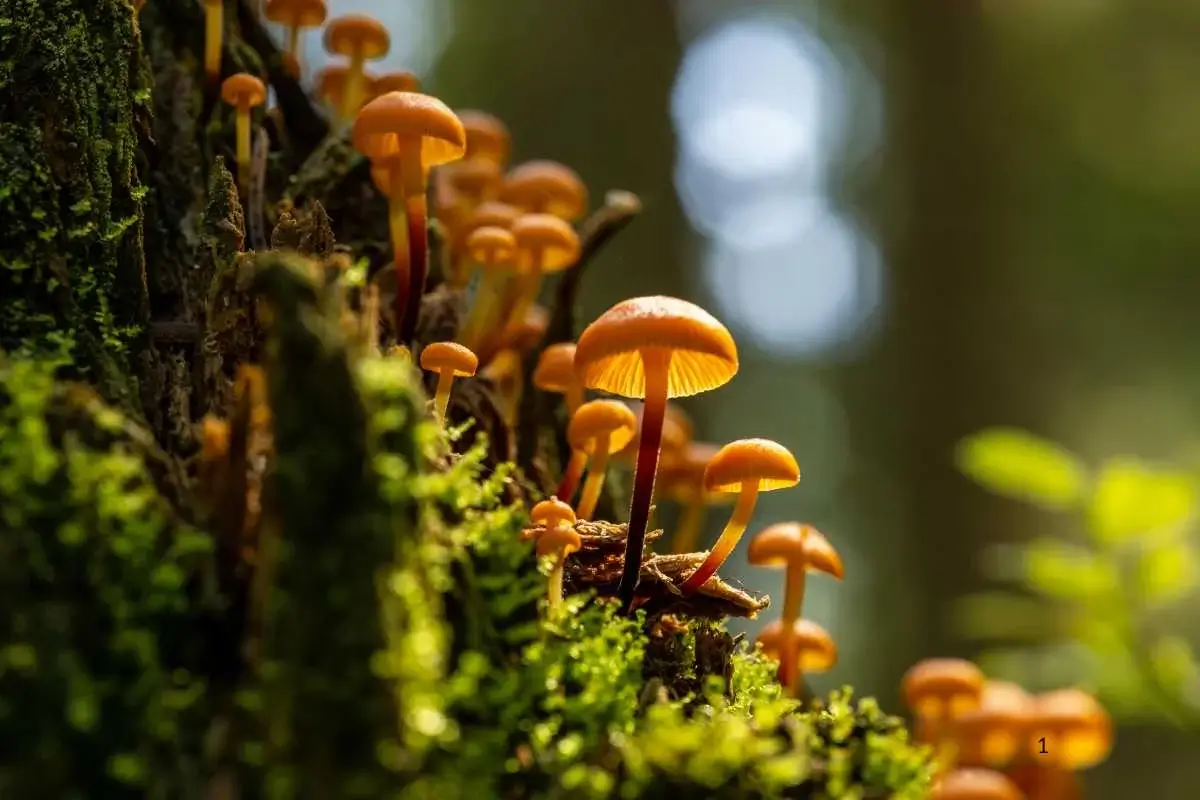
Fungi are among the most important yet overlooked organisms in the forest ecosystem. Hidden beneath the forest floor, they form a complex underground network that connects plants, trees, and soil life. These fungi play a vital role in nutrient cycling, decomposition, and communication between plants. By breaking down dead organic matter such as leaves, wood, and animal remains, fungi return essential nutrients to the soil, supporting the growth of new vegetation and maintaining the balance of the ecosystem.
In addition to decomposing organic material, many fungi form symbiotic partnerships with plants through structures known as mycorrhizae. These networks attach to plant roots and extend deep into the soil, allowing plants to absorb water and nutrients more efficiently. In exchange, fungi receive carbohydrates produced by the plant through photosynthesis. This relationship enhances plant resilience to drought and disease while improving soil structure and fertility. Some scientists even refer to this underground connection as the “wood wide web,” emphasizing how fungi facilitate communication and cooperation among forest plants.
Without fungi, forests would struggle to survive. Dead plant matter would accumulate, nutrients would not cycle effectively, and trees would have difficulty absorbing water and minerals. The entire forest ecosystem would become less diverse and less resilient. Fungi also support countless species of insects, mammals, and birds that depend on decaying logs and fertile soil for food and habitat. Their presence is a cornerstone of life in forest environments.
What kinds of fungi live in forests, and how do they support the ecosystem through decomposition and symbiotic relationships? How do mycorrhizal fungi help plants grow stronger and more resilient? What might happen if fungi disappeared from forest ecosystems, and what can we do to protect these essential organisms that quietly sustain life beneath our feet?
Use the online submission form when sending your articles to help us track all of your submissions. Please try to write about the above topic. Your response should be at least 1,000 words.
To receive credit, your effort is what matters. You should find ways to contribute thoughtful ideas that will help others. Feel free to use personal stories or other information that you want to share, but do not use real names or other identifying information. You may write your response in the space provided or upload your response. Once we review your response, you will receive credit.
Click the button below to submit your article and get your credit.


Membership Email:
Verification Status: